Explorations of public policy concerning alcohol, nicotine, other drugs, prostitution, gambling, pornography, ....
Book, Concepts in Law and Economics
Book, Regulating Vice
TEDx Talk, Re-legalizing Drugs
Article, Alcohol, Tobacco, and Gambling in Russia
Article, The Parthenon Marbles in the British Museum
Article, Toward Drug Control: Exclusion and Buyer Licensing
Article, Regulating Vice
Regulating Cocaine
Russian Alcohol Control
Self-Exclusion
Regulating Commercial Sex
Audio, MJ Legalization; for the purposes of the debate I presented the anti-legalization case, though I support legalization
Farewell but Not Final Post
Successor Blog, Self-Exclusion
Behavioral Economics Outlines
Links
Reality-Based Community
Crescat Sententia
Marginal Revolution
Drug WarRant
The Intercept
Market Design
Cultural Cognition
Noahpinion
Overlawyered
Last One Speaks
Drug Policy Alliance
Volokh Conspiracy
Dani Rodrik
Andrew Sullivan
Squad Founder
Jim Leitzel
vicesquad_at_gmail.com
Squad Members
Nikkie
Bernard
Michael
Ryan ("Vicewire")
Post Notables
Zero Tolerance
Addiction as Disease
Time Inconsistency
Harm Principle
Mill on Gambling
Standard Vice Concerns
Drugs and Lawrence v. Texas
Jake Leg
Underage Drinking
Smoking Bans
Vice Tax Revenues
Internet Gambling
Safer Smokes?
Harm Reduction and Teens
Harm Reduction and Vice Benefits
Mann Act
Drug War Dynamics
The Washingtonians
Saloons
Advertising Vice
Regulating Indecency
Library Smut (CIPA)
Alco-bracelet
Crack Babies
Nude Dancing
Absinthe
Obesity
Jail for Drug Possession?
Free Trade and Vice
Snus
Internet Drug Policy
Why are Drugs Illegal?
The Robustness Principle
Initial Post, 9/18/2003
More Links
Newmark's Door
Chase Me Ladies
Adam Smith Institute
The Agitator
Grits For Breakfast
Becker-Posner
Freakonomics
Talking Drugs
Alcohol and Drugs History Blog
Transform
UofC Law Blog
LEAP
Media Awareness Project
Archives
09/01/2003 - 10/01/2003
10/01/2003 - 11/01/2003
11/01/2003 - 12/01/2003
12/01/2003 - 01/01/2004
01/01/2004 - 02/01/2004
02/01/2004 - 03/01/2004
03/01/2004 - 04/01/2004
04/01/2004 - 05/01/2004
05/01/2004 - 06/01/2004
06/01/2004 - 07/01/2004
07/01/2004 - 08/01/2004
08/01/2004 - 09/01/2004
09/01/2004 - 10/01/2004
10/01/2004 - 11/01/2004
11/01/2004 - 12/01/2004
12/01/2004 - 01/01/2005
01/01/2005 - 02/01/2005
02/01/2005 - 03/01/2005
03/01/2005 - 04/01/2005
04/01/2005 - 05/01/2005
05/01/2005 - 06/01/2005
06/01/2005 - 07/01/2005
07/01/2005 - 08/01/2005
08/01/2005 - 09/01/2005
09/01/2005 - 10/01/2005
10/01/2005 - 11/01/2005
11/01/2005 - 12/01/2005
01/01/2006 - 02/01/2006
02/01/2006 - 03/01/2006
03/01/2006 - 04/01/2006
07/01/2006 - 08/01/2006
08/01/2006 - 09/01/2006
09/01/2006 - 10/01/2006
10/01/2006 - 11/01/2006
11/01/2006 - 12/01/2006
12/01/2006 - 01/01/2007
01/01/2007 - 02/01/2007
02/01/2007 - 03/01/2007
03/01/2007 - 04/01/2007
04/01/2007 - 05/01/2007
05/01/2007 - 06/01/2007
06/01/2007 - 07/01/2007
07/01/2007 - 08/01/2007
08/01/2007 - 09/01/2007
09/01/2007 - 10/01/2007
10/01/2007 - 11/01/2007
11/01/2007 - 12/01/2007
12/01/2007 - 01/01/2008
01/01/2008 - 02/01/2008
02/01/2008 - 03/01/2008
03/01/2008 - 04/01/2008
04/01/2008 - 05/01/2008
05/01/2008 - 06/01/2008
07/01/2008 - 08/01/2008
03/01/2010 - 04/01/2010
05/01/2011 - 06/01/2011
08/01/2011 - 09/01/2011
08/01/2012 - 09/01/2012
02/01/2016 - 03/01/2016

Book, Regulating Vice
TEDx Talk, Re-legalizing Drugs
Article, Alcohol, Tobacco, and Gambling in Russia
Article, The Parthenon Marbles in the British Museum
Article, Toward Drug Control: Exclusion and Buyer Licensing
Article, Regulating Vice
Regulating Cocaine
Russian Alcohol Control
Self-Exclusion
Regulating Commercial Sex
Audio, MJ Legalization; for the purposes of the debate I presented the anti-legalization case, though I support legalization
Farewell but Not Final Post
Successor Blog, Self-Exclusion
Behavioral Economics Outlines
Links
Reality-Based Community
Crescat Sententia
Marginal Revolution
Drug WarRant
The Intercept
Market Design
Cultural Cognition
Noahpinion
Overlawyered
Last One Speaks
Drug Policy Alliance
Volokh Conspiracy
Dani Rodrik
Andrew Sullivan
Squad Founder
Jim Leitzel
vicesquad_at_gmail.com
Squad Members
Nikkie
Bernard
Michael
Ryan ("Vicewire")
Post Notables
Zero Tolerance
Addiction as Disease
Time Inconsistency
Harm Principle
Mill on Gambling
Standard Vice Concerns
Drugs and Lawrence v. Texas
Jake Leg
Underage Drinking
Smoking Bans
Vice Tax Revenues
Internet Gambling
Safer Smokes?
Harm Reduction and Teens
Harm Reduction and Vice Benefits
Mann Act
Drug War Dynamics
The Washingtonians
Saloons
Advertising Vice
Regulating Indecency
Library Smut (CIPA)
Alco-bracelet
Crack Babies
Nude Dancing
Absinthe
Obesity
Jail for Drug Possession?
Free Trade and Vice
Snus
Internet Drug Policy
Why are Drugs Illegal?
The Robustness Principle
Initial Post, 9/18/2003
More Links
Newmark's Door
Chase Me Ladies
Adam Smith Institute
The Agitator
Grits For Breakfast
Becker-Posner
Freakonomics
Talking Drugs
Alcohol and Drugs History Blog
Transform
UofC Law Blog
LEAP
Media Awareness Project
Archives
09/01/2003 - 10/01/2003
10/01/2003 - 11/01/2003
11/01/2003 - 12/01/2003
12/01/2003 - 01/01/2004
01/01/2004 - 02/01/2004
02/01/2004 - 03/01/2004
03/01/2004 - 04/01/2004
04/01/2004 - 05/01/2004
05/01/2004 - 06/01/2004
06/01/2004 - 07/01/2004
07/01/2004 - 08/01/2004
08/01/2004 - 09/01/2004
09/01/2004 - 10/01/2004
10/01/2004 - 11/01/2004
11/01/2004 - 12/01/2004
12/01/2004 - 01/01/2005
01/01/2005 - 02/01/2005
02/01/2005 - 03/01/2005
03/01/2005 - 04/01/2005
04/01/2005 - 05/01/2005
05/01/2005 - 06/01/2005
06/01/2005 - 07/01/2005
07/01/2005 - 08/01/2005
08/01/2005 - 09/01/2005
09/01/2005 - 10/01/2005
10/01/2005 - 11/01/2005
11/01/2005 - 12/01/2005
01/01/2006 - 02/01/2006
02/01/2006 - 03/01/2006
03/01/2006 - 04/01/2006
07/01/2006 - 08/01/2006
08/01/2006 - 09/01/2006
09/01/2006 - 10/01/2006
10/01/2006 - 11/01/2006
11/01/2006 - 12/01/2006
12/01/2006 - 01/01/2007
01/01/2007 - 02/01/2007
02/01/2007 - 03/01/2007
03/01/2007 - 04/01/2007
04/01/2007 - 05/01/2007
05/01/2007 - 06/01/2007
06/01/2007 - 07/01/2007
07/01/2007 - 08/01/2007
08/01/2007 - 09/01/2007
09/01/2007 - 10/01/2007
10/01/2007 - 11/01/2007
11/01/2007 - 12/01/2007
12/01/2007 - 01/01/2008
01/01/2008 - 02/01/2008
02/01/2008 - 03/01/2008
03/01/2008 - 04/01/2008
04/01/2008 - 05/01/2008
05/01/2008 - 06/01/2008
07/01/2008 - 08/01/2008
03/01/2010 - 04/01/2010
05/01/2011 - 06/01/2011
08/01/2011 - 09/01/2011
08/01/2012 - 09/01/2012
02/01/2016 - 03/01/2016
Vice Squad
Thursday, April 24, 2008
Bingo and Smoking; Bingo or Alcohol
Vice Squad has been trumpeting the smoking-ban induced decline in bingo for so long now that it is amazing there is any bingo left. But there is, and today the New York Times catches up to bingo/smoking ban complemetarity: "[Managers of charity bingo parlours] say smoking goes with bingo like peanut butter with jelly."
For the vice policy aficionado, however, this week's premier bingo-related story derives from Carlisle in the UK. Remember those ASBOs of questionable constitutionality (British constitutionality, that is)? One 23-year old gentleman had a history of being a troublesome drunk, so he was given an ASBO prohibiting him both from drinking and from patronising drinking establishments in Carlisle city centre. (Incidentally, the idea that a troublesome drunk can have his drinking privileges revoked is consistent both with Vice Squad's robustness principle and with John Stuart Mill's interpretation of his harm principle.) But this particular yob, er, gentleman, also enjoys a bingo hall in Carlisle. Alas, the bingo parlour is a drinking establishment (no longer a smoking establishment in England!), so the terms of his ASBO would keep him from bingo-ing. This will not stand, cried the Cumbrian magistrates, and voila, an exception was granted: he can go to the bingo hall, but he cannot drink there. (Vice Squad is touched by this act of mercy.) If the exception is abused via bingo-hall drinking or other unseemly behavior, there will be consequences to pay -- perhaps a curse will be imposed.
Vice Squad has been on the road, or at home, nodding; apologies for the interregnum.
Labels: alcohol, bingo, Britain, complementarities, licensing, Mill, robustness, smoking ban
Saturday, April 05, 2008
Regulating Vice: Chapter 3, "The Robustness Principle"
Enough time has elapsed since the, er, five-part summary of Chapter 2, for Vice Squad to move on to summarizing Chapter 3 in surprise bestseller Regulating Vice. Recall that we started by looking at John Stuart Mill's harm principle. Then we explored addiction, to see if there is any reason to alter the harm principle because of the addictiveness and self-control problems (or just plain shortfalls from rationality) associated with many vices. Chapter 3, "The Robustness Principle," argues that yes, Mill's approach -- which would rule out policies that have as their motivation the reduction of adult vice -- should be replaced by that pesky Robustness Principle, long foisted on the loyal Vice Squad reader. From Chapter 3:
Some adult vice-related consumption is harmful and (arguably) less than rational; further, we cannot easily distinguish rational from irrational choice with respect to vice. This leads us to the robustness principle.... Public policy towards potentially addictive activities should be robust with respect to departures from full rationality. Vice policy for adults should hold up pretty well if everyone is always well-informed and fully rational, and it should work well, too, even if some or many vice-related choices are irrational. We require this robustness precisely because we cannot ascertain how much vice is rational, nor distinguish the rational component from that which flows from a degradation of the reflecting faculties.I suspect some more Vice Squad discussion of the Robustness Principle in the days (weeks? decades?) ahead. [Update: Here's the brief follow-up post.]
A robust vice policy will provide some support for those who are uninformed or struggling with self-control in their decision making. The provision of such support should not impose substantial costs upon those whose vice-related decisions are marked by rationality. One example of a policy that satisfies the robustness principle is a requirement for purchases of heroin, say, to be made with at least three days’ notice – where the notice would be revocable by the adult would-be purchaser at any time during the ensuing waiting period. Rational heroin consumers, and even rational addicts, can then assure themselves of a steady supply, but those struggling with self-control issues will not be able to immediately satisfy an unforeseen craving and can cancel an impulsive order when their decision-making faculties are controlled by their more considered selves.
For those keeping score at home, here's the Regulating Vice Posts Roundup:
(1) Announcement
(2) Introduction (part I)
(3) Introduction (part II)
(4) Introduction (part III)
(5) Erratum, Page 2!!
(6) Chapter 1, The Harm Principle (part I)
(7) Chapter 1, The Harm Principle (part II)
(8) GMU Talk (part I)
(9) GMU Talk (part II)
(10) Chapter 2, Addiction (part I)
(11) Chapter 2, Addiction (part II)
(12) Chapter 2, Addiction (part III)
(13) Chapter 2, Addiction (part IV)
(14) Chapter 2, Addiction (part V)
Labels: heroin, Mill, Regulating Vice, robustness
Saturday, February 02, 2008
Regulating Vice: Chapter 2, "Addiction: Rational and Otherwise" (part V)
OK, I simply refuse to have any more posts -- after this one -- about Chapter 2 of surprise bestseller Regulating Vice. Following a look at comparative addictiveness -- itself a slightly misguided concept, given that the addictiveness of a drug or activity varies among, well, everything: people, time, place, manner, and so on -- Chapter 2 notes how addiction is not, and should not be, an excuse for committing a non-victimless crime. (While behaviors such as simple possession should not be illegal in any case, if they are illegal, there's a decent argument that addicts should not be held responsible for breaking a drug possession law.) Then Chapter 2 offers a summary of a sort, suggesting that: (1) there is a case -- not airtight, but a significant case -- that some addictive-type behavior lies outside the bounds of standard notions of rationality or even dynamic inconsistency; (2) self-control problems and addiction lie on a continuum, and even in a world without addiction, there might be a role for public policy to help (adults) manage their self-control problems; and (3) that despite all the discussion of addiction and self-control when, for instance, drug policy is being discussed, actual public policies (and even private responses) to vice do not seem to be closely tied to changes in our scientific understanding of addiction. Following the conclusion is the first of many "Vice Verdicts" sections; this one looks at four court cases in which addiction and responsibility for behavior were central concerns.
The idea behind the opening chapters of Regulating Vice, just to recap, is to examine what we can learn from John Stuart Mill's harm principle, and then to look closely at addiction and self-control, to see if our 21st century understanding of addiction provides any (further?) reason to accept or amend or reject the harm principle. This is the point at which Chapter 3 picks up. Whew.
Regulating Vice Posts Roundup:
(1) Announcement
(2) Introduction (part I)
(3) Introduction (part II)
(4) Introduction (part III)
(5) Erratum, Page 2!!
(6) Chapter 1, The Harm Principle (part I)
(7) Chapter 1, The Harm Principle (part II)
(8) GMU Talk (part I)
(9) GMU Talk (part II)
(10) Chapter 2, Addiction (part I)
(11) Chapter 2, Addiction (part II)
(12) Chapter 2, Addiction (part III)
(13) Chapter 2, Addiction (part IV)
Labels: addiction, Mill, Regulating Vice
Wednesday, January 09, 2008
Regulating Vice: Chapter 2, "Addiction: Rational and Otherwise" (part II)
My project of providing a running summary of Regulating Vice came a cropper in early December, but is herewith revived. We left off after characterising rational addiction. Chapter 2 continues with a look at time inconsistency, which we first blogged about during Vice Squad's inaugural week. The basic idea is that people tend to be more impatient with respect to choices concerning the here and now and near future, than they are about choices over alternatives for the more-distant future. So folks have a sort of prudent, patient, long-view Dr. Jekyll side, and an imprudent, impatient, live-for-the-moment Mr. Hyde side. Mr. Hyde decides how much to drink today, and Dr. Jekyll finds the choices made on his behalf by Mr. Hyde to involve excessive drinking.
There is nothing obviously "irrational" about time inconsistency -- that is, there is nothing inherent in rational choice which requires dynamically consistent choices. But private and public vice policies appropriate for a rational, time inconsistent person might differ from those policies appropriate for a dynamically consistent rational consumer. (Similarly, policies appropriate for irrational consumers also might differ from those of rational, time consistent consumers.) Dr. Jekyll's might look for some commitment device that will keep Mr. Hyde's from drinking too much, and public policies such as taxes or buyer licenses can help Jekyll gain the upper hand. [We could be evenhanded, and say that the public has no more reason to side with Jekyll than with Hyde, but vice tends to be associated with excess. It seems to be more common (or more painful) to regret one too many drinks than one too few.] The costs that Hyde imposes upon a non-consenting Jekyll have many of the marks of economic externalities -- the difference being that rather than Hyde and Jekyll being two physically separate people, they are different incarnations of the same person. In an analogy with "externalities," these costs are called "internalities." And if you accept the externality-internality analogy, then a harm to Jekyll is a type of "harm to others," and hence social coercion of Hyde does not violate John Stuart Mill's harm principle.
Regulating Vice Posts Roundup:
(1) Announcement
(2) Introduction (part I)
(3) Introduction (part II)
(4) Introduction (part III)
(5) Erratum, Page 2!!
(6) Chapter 1, The Harm Principle (part I)
(7) Chapter 1, The Harm Principle (part II)
(8) GMU Talk (part I)
(9) GMU Talk (part II)
(10) Chapter 2, Addiction (part I)
Labels: addiction, dynamic inconsistency, Mill, Regulating Vice
Wednesday, November 28, 2007
Regulating Vice: Chapter 1, "The Harm Principle" (2)
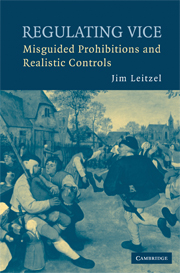 What if John Stuart Mill were the Drug Czar? What are the strictest drug policies that we could have that would be consistent with Mill's "Harm Principle" and the precepts of On Liberty? Interpretations of Mill can vary, of course, but in what I think are the most plausible interpretations, the libertarian-style philosopher would allow quite strict controls over drugs. What would be ruled out by Mill would be the criminalization of adult drug possession, as well as a medicalization-type regime in which drugs are available legally only via a prescription. Among the controls that would not run afoul of Czar Mill are bans on sales of those drugs, such as marijuana, for which sales are not really requisite for consumption; bans on advertising of drugs; high taxes on drugs; and buyer and seller licensing. While Mill would not allow a policy to be adopted if its purpose were to limit adult vice consumption, he would permit many policies that have other aims, but have the side effect of limiting adult consumption. Thus the high taxes, for instance, are OK (Mill goes further -- they are all but required) if their purpose is to raise necessary government revenue, even though high taxes will discourage drug consumption. And while I don't state it explicitly in Regulating Vice, I think that you could have a fairly restrictive, and quite adequate, drug control regime while staying within the bounds proposed by J. S. Mill.
Labels: Mill, Prohibition, Regulating Vice
Monday, November 26, 2007
Regulating Vice: Chapter 1, The Harm Principle
The Introduction to Regulating Vice is so engaging that I thought, hey, people might actually read this. What can I do to make sure that this won't happen? Then inspiration came: I could devote Chapter 1 to John Stuart Mill and his harm principle. Mill was not in favor of governmental or private coercion of adults in their "self-regarding" actions -- a category within which most vice activities fall. What is a poor vice prohibitionist to do, then, in a Millian world? Well, you can search for loopholes: kids are an obvious one. Maybe we can prohibit vice for adults as a collateral measure aimed at Helping The Children. Or maybe we can argue that there is No Such Thing as a self-regarding act. That joint you are puffing on in the privacy of your home ten miles away is hurting me, or hurting somebody, so you must be stopped. (My vice? Well, thanks for asking, but my vice is benign, and self-regarding.) Anyway, I argue that these exceptions don't cut the mustard -- for the traditional vices, they would not justify prohibition, in Mill's eyes or mine. (In On Liberty, Mill was quite explicit about some of the vice policy implications of his harm principle: alcohol sales must be allowed, private gambling must be legal, prostitution per se cannot be criminalized, and so on.) But then there is a third exception, one I call "Vice Lunacy." Mill argued, essentially, that coercion is OK when someone is in a condition of a sort of temporary irrationality, when a person is “in some state of excitement or absorption incompatible with the full use of the reflecting faculty…” [see paragraph 5 in the linked section of On Liberty]. Hmmm, maybe vice brings on this state, especially for addicts. Can we justify a vice prohibition on these grounds, while still remaining true to Mill? That is an issue that I take up in Chapters 2 and 3.
Of course, maybe you don't like the harm principle, maybe you don't see any need to be true to Mill. The problem (or one problem) with an outright rejection of Mill is that it then sets one up to admit the propriety of almost any invasive or tyrannous act, such as the government telling you what time to get up in the morning or what color to paint your living room. But again, this is a topic to which I return in Chapter 3....
Labels: Mill, Regulating Vice
Tuesday, November 20, 2007
Regulating Vice: The Introduction (part I)
Regulating Vice starts off by trying to impress upon the reader (note the singular) that vice policy has traditionally been highly unstable, and that on these grounds alone there is reason to believe that current policies will prove similarly ephemeral. (An early Vice Squad post offers a parallel discussion, not coincidentally.) The next step is to delimit the subject matter: what constitutes a vice? (An axiomatic-style definition is not sought.) Excess and habit are part of the standard equation, as is the idea that the behavior in question does not have (at least in some private manifestations) direct effects upon non-participants -- in econ-speak, 'no externalities', or in Mill-speak, 'self-regarding'. And then there is the conflation of wickedness (or immorality) and pleasure, which separates gambling, for instance, from exercise, though both gambling and exercise can be habitual, excessive, and self-regarding. [The very end of Regulating Vice returns to the question of what is a vice.]
...taking perceptions of immorality as given, a traditional vice exhibits excess, is habitual, and produces direct consequences that fall nearly in their entirety on the person engaging in it. These common traits imply that approaches to regulating vices as disparate as gambling and injecting heroin involve a shared set of principles. Within the class of illicit drugs alone there are vast and important variations that influence the appropriateness of alternative regulatory structures; nevertheless, it makes sense to discuss public policy toward alcohol, gambling, prostitution, and so on, within a common framework [pp. 5-6].The framework that is then proposed is one that is primarily economic and legal, one that takes into account (at least implicitly) the pleasures that some people find in vice. The standard three and one-third vice concerns (familiar to the loyal Vice Squad reader) of kids, addicts, externalities, and internalities are then introduced. This gets us to page 12; more tomorrow, I hope.
Labels: Mill, Regulating Vice
Tuesday, June 26, 2007
Porn Again
XXX.Church.com is in the news (2-page pdf of New York Times story) again. (Again, you ask? But surely you remember the Vice Squad post of November 2, 2004?) XXXChurch is the anti-porn ministry, but one that spreads its message in a relaxed way, and directly to porn stars, among others. They have lots of ongoing events, including church breakfasts around the country ("Porn and Pancakes") and a debate series featuring one of the pastors along with porn star Ron Jeremy. (I am slated to be out of town, alas, during the August 6 Chicago debate.) Then there is National PornSunday, scheduled for October 7, 2007, though I suspect that this isn't one of those national commemorations that gets a sound byte mention from the president. This is in addition to lots of other dimensions to XXXChurch.com's work, including two elements we mentioned in the 2004 post: accountability software (X3watch) that sends a list of your suspected internet porn wanderings to your designated partner, and the "God kills a kitten every time you masturbate" campaign, now featuring an Operation Save the Kittens video. XXXChurch is John Stuart Mill's kind of anti-porn lobbyist: they are not about passing laws to shut down the porn industry, or coercing people to avoid porn. They employ entreaty, not command, and thus earn Vice Squad (somewhat short of national) commendation.
Labels: internet, Mill, pornography, sex
Wednesday, May 30, 2007
Reducing Alcohol Consumption via Inconvenience
The licensing of vice sellers as a method to help enforce regulations and police externalities such as public nuisances passes muster with no less a fan of individual liberty than John Stuart Mill. Vice Squad might even go beyond Mill, and support seller licensing as a way to place a small barrier to vice availability. But the licensing restrictions upon carry-out alcohol in St. Georges, Utah, are beginning to put a substantial barrier in the way of alcohol acquisition.
The problem has worsened, according to this AP article, because of rapid population growth in the St. Georges area: there is one state liquor outlet for the town of 126,000 people. In Utah, wine, distilled alcohol, and any beer that contains more than 3.2 alcohol by weight can be sold only from a state-owned store.
Why don't they open more stores? Well, they are getting around to it, but state law doesn't require another store -- it only establishes the maximum number of stores across the state (one per 48,000 people), and doesn't concern itself with the intrastate liquor store distribution. Of course, you could drive for half an hour from St. Georges to Nevada to buy your booze, but according to the linked article, you could then face 6 months in prison when you cross back into Utah with your alcohol on board. (Recall the second section of the 21st Amendment: "The transportation or importation into any State, Territory, or possession of the United States for delivery or use therein of intoxicating liquors, in violation of the laws thereof, is hereby prohibited.")
3.2 percent (by weight) or lower alcohol beer is more widely available in Utah. Few beers in the US, in their regular form, are this low in alcohol, but big brewers tend to manufacture 3.2 versions of their beers for sale in Utah and the other (three, according to this 2001 article) states that use the 3.2 figure for regulatory purposes. The 3.2 threshold is an artifact from the end of Prohibition. After FDR became president, he moved to amend the Volstead Act, the law which implemented the 18th Amendment's national alcohol prohibition. In April 1933, the Volstead Act was amended to permit 3.2 percent beer; before the end of the year, national prohibition was history. The state whose ratification put the 21st Amendment over the top, and hence ended Prohibition, was Utah.
Labels: alcohol, licensing, Mill, Prohibition, robustness
Friday, April 27, 2007
Pakistani Obscenity Vigilantes
Naturally, they have an expansive view of obscenity; for instance, audio and video shops are verboten in the worldview of the private oppressors, independently, it seems, of precisely what wares are on offer at the shops. So if the government in Islamabad won't close brothels and audio and video shops, they will take matters into their own hands. This is no idle threat -- their stick-wielding anti-vice groups have already issued hard-to-ignore warnings to shop owners. Last month the vigilantes kidnapped, and held for two days, a woman they accused of being a prostitute, along with three of her relatives, according to this article.
How come they get to decide? If I decide that sticks and anti-vice activities are verboten, can I suppress these vigilantes? Oh I see, they have adopted what John Stuart Mill called the "logic of persecutors," that is to say, the idea that "we may persecute others because we are right, and... they must not persecute us because they are wrong." But what if both sides adopt this logic?
Oh yeah, the self-appointed anti-vice lords were none too pleased when a female Pakistani government minister embraced her paragliding instructor in Paris. I thought it was illegal not to embrace in Paris.
Vice Squad has noticed similar private anti-vice enforcement in the past; for instance, in Pakistan (February 13, 2006), and repeatedly for Valentine's Day (February 14, 2007).
Update: The logic of persecutors also makes continued appearances in the form of Pakistan's anti-blasphemy laws: "Catholic man arrested twice on wedding day for alleged blasphemy;" and, "Play about burkas banned in Pakistan."
Labels: blasphemy, Mill, obscenity, Pakistan
Friday, April 20, 2007
Of Guns and Drugs
The tragedy in Blacksburg has once again spurred debate about appropriate policy towards firearms. Gun control does not fit into Vice Squad’s ambit, however, because firearms are fraught with externalities (positive and negative) in ways that go well beyond those associated with many manifestations of the traditional vices. That is, on the negative side, when someone misuses a gun, it is often the case (as in Blacksburg, alas) that other people are directly injured or killed. When someone misuses a drug, the direct costs are borne by the user him or herself (though those close to an addict suffer too, of course, as the Guardian article linked to on Wednesday reminds us). To employ John Stuart Mill’s terminology, drugplay tends to be much closer to a ‘self-regarding’ activity than does gunplay.
Nevertheless, gun control debates are marked by what I find to be an interesting parallel with drug policy discussions. Vice Squad has noted before the logically sound proposition that if there were no drugs, there would be no drug problems. That is sort of the macro version of the proposition; there is a micro version, too, that if person A had never used drugs in the first place, he would not have ended up with any drug problems. While unobjectionable so far, the next step in the supposed syllogism, a step to which these propositions are sometimes put, does not follow as a matter of logic. That step is: ...therefore, we should meet any current drug problems (which, macro and micro, occur under our current drug prohibition) with a stricter, more-assiduously enforced prohibition.
These sorts of propositions identify problems after they arise, and then posit that if we had just done something different, these precise problems would not have arisen. Again, these claims are (likely) correct. But what they fail to look at are all the other problems that might arise when their preferred policy is implemented (or that another set of "different" policies might also have prevented the tragedy at issue).
What I find interesting in the gun control debate is that this sort of inappropriately extended logic seems to be used by both sides. Those in favor of increased firearm regulation sometimes employ a direct parallel: no guns means no gun crime, therefore we should do more to eliminate guns. (Or, no guns available to person A means no gun misuse by person A, therefore...) But there’s another version for those who are sympathetic to some slackening of firearm controls. This has to do with the defensive uses of firearms. Anytime someone uses a firearm to commit a violent crime, it is almost surely the case that, had another person been armed with a gun and been in the right place at the right time, that person could have prevented or mitigated the crime. The unsound (as a matter of strict logic) extension, of course, is that therefore we should have more armed people running about.
Note that I am not claiming that either the stricter or liberalized firearm controls are unsound policies. I am only claiming that one piece of logic that is frequently put forward in their defense is far from dispositive and perhaps even false.
Labels: drugs, guns, Mill, Prohibition
Tuesday, January 23, 2007
Libertarian Paternalism and Vice Policy Robustness
Professor Becker, Judge Posner, and Professor Sunstein have had a blog exchange concerning “Libertarian Paternalism.” This phrase comes from work by Professors Sunstein and Thaler, and it concerns policies that push folks in a certain (presumably desirable, for typical people) direction, without limiting their freedom to choose otherwise. As a form of Libertarian Paternalism lies at the heart of my approach towards vice policy, I thought that I might say a little bit more about it.
The name I have adopted for my approach to vice control is the “robustness principle.” The robustness principle states that a vice regulatory regime should work well irrespective of the precise extent of rationality or addiction associated with vice.
The main rationale for the robustness principle lies in ignorance. We can’t easily judge when a habit becomes an addiction, or when rational consumption involves dynamic inconsistency or shades into compulsion. So we want to avoid a regulatory regime that only makes sense if there is no such thing as vice rationality, or an alternative regime that only works well if everyone makes considered, sober judgements about his or her vice participation. What we tend to end up with when we avoid these extremes is vice controls that offer some assistance to those who are misinformed or struggling with self-control issues, as long as those controls do not impinge significantly upon those who are rationally vicious. We entreat and induce but we do not compel -- a’ la libertarian paternalism.
Pure laissez faire towards adult vice if not so attractive, even if we depart from it through mandatory information provision. The difficulty with laissez-faire lies in the affinity of addiction to disease, and the problems with vice self-control that arise among non-addicts; in John Stuart Mill’s terms, vice consumers might often be in some state “incompatible with the full use of the reflecting faculty” -– and hence at least partially exempt from the deference that generally should be paid to adult self-regarding decisions. (And if laissez-faire is a first-best strategy, competing jurisdictions that impose differing robust regimes will eventually reveal that fact –- in the meantime, the departures from those first-best free market polices will not be very costly, given the criterion of robustness.)
The robustness-based vice exemption from our usual deference to adult self-regarding behavior is only a partial exemption. Pre-emptive controls on vice decision making hold the potential to be extremely oppressive, as Mill noted: “The preventive function of government...is far more liable to be abused, to the prejudice of liberty, than the punitory function; for there is hardly any part of the legitimate freedom of action of a human being which would not admit of being represented, and fairly too, as increasing the facilities for some form or other of delinquency.” Those policies that help guide vice decision making in the direction of rationality will become very expensive (in terms of the welfare of rational vice producers and consumers) if they establish substantial barriers to informed use. So unless we are absolutely certain that there is no such thing as rational, informed vice consumption, significant impediments are unwise.
A robust vice policy regime should stand up pretty well if our knowledge or situation changes. And our knowledge and our situation are constantly changing. Tomorrow we might learn that moderate alcohol consumption has more severe negative health effects than our current understanding indicates. The next day evidence might arise that moderate ecstacy consumption promotes mental health with little risk of addiction. A robust regime has already taken these possibilities – and their opposites, that alcohol has more benefits and ecstacy more costs than previously believed –- implicitly into account. We are quite unsure about the extent of rationality governing the use of these substances, so robustness instructs us to choose policies that operate effectively whether the case for rational use improves or deteriorates. (This property of hardiness in the face of altered circumstances is not exhibited by either broad vice prohibitions or laissez-faire.) There might be good reason to adjust even a robust regime at the margins if our understanding of costs and benefits changes – but not to radically revise that regime. Robust rules build-in substantial tolerances for errors in our understanding.
Robustness is a useful precept beyond vice policy, particularly where there exist significant departures from perfect information. A major virtue of democracy as a form of government, for instance, is that it is robust with respect to the personal qualities of politicians: democracy operates well when enlightened leaders are at hand, and it also works tolerably (though less well) when leaders are shortsighted or cruel or venal. Democracy represents a compromise: democratic institutions purposely make it harder for exceptional leaders to guide a country in desirable directions, to ensure that a bad person temporarily in charge will not be in a position to inflict enormous damage. A theoretically better system would be one with expansive executive powers when an enlightened leader is in charge, but much more limited powers when a mediocre or diabolical person holds the reins. But we cannot easily judge (or agree upon) who is enlightened and who is diabolical, so democracies institute a system of checks and balances that constrain leaders of any stamp. The theoretical benefits of basing the extent of power granted upon the character of the current executive are not available in practice. Similarly, the optimal vice controls that would not interfere with rational adult choices while guiding the decisions emanating from diseased or irrational minds are not viable in practice.
Labels: Mill, robustness
Tuesday, April 26, 2005
India and John Stuart Mill
"No person ought to be punished simply for being drunk; but a soldier or a policeman should be punished for being drunk on duty." So wrote John Stuart Mill in the fourth chapter of On Liberty. In India, they are beginning to take this to heart, following a horrific alleged rape involving a drunken police officer. It turns out that surprise inspections revealed that some 36 officers in Mumbai were drunk on duty last year. This Times of India story has more; here's an excerpt:
Lawyer Sudeep Pasbola said, "Normally you will find 50% of constabulary drunk on night duty. There are several reasons bad living conditions, the pressure under which they are working and long duty hours. There are also emotional and social reasons. Many constables do not have quarters and their families stay in villages. For some others, they are not able to enjoy a good family life as they are on duty for as long as 12 to 15 hours daily. They resort to drinking in an attempt to drown their sorrows."Mill, like his father, was a long-time (and high-ranking) employee at India House.
Sunday, April 24, 2005
Dance Bars and JS Mill Win a Round in India
Recent months have witnessed a crackdown on various forms of purported obscenity in the Indian state of Maharashtra, which includes Mumbai (Bombay). But charges brought against one dance bar in the Maharashtra city of Nagpur have now been tossed out by the Bombay High Court. One of the charges didn't apply to the bar because the statute upon which it was based only governed printed obscenities. The second charge was not relevant, the court ruled, because the law requires public obscenity to cause annoyance -- and none of the customers complained. Mill's harm principle rules in Maharashtra!
Speaking of old Englishmen, we at Vice Squad took off this weekend to celebrate the birthday of William Shakespeare, poet of vice.
Wednesday, October 27, 2004
What Did John Stuart Mill Say About Gambling?
Believe it or not, the debate about the new British gambling bill has spilled over into what position Vice Squad hero John Stuart Mill would have taken on the matter. Roy Hattersley, British Labour Party politician of renown (and now a Baron), claims in this Guardian column that Mill would not approve of the gambling liberalisation, but his reading of Mill is hopelessly muddled. Regarding the Blair government's move to liberalise gambling, combined with the government's refusal to push for a national public smoking ban, Hattersley asks (rhetorically?), "Can anyone doubt that if the full Mill doctrine were applied to either of the 'libertarian issues' that now face society, the policy the government has adopted would be reversed?" Uh, actually, yes, one can doubt this, and I do.
First, second-hand smoke and gambling are quite different, in that second-hand smoke can more-or-less directly harm identifiable individuals. Gambling lacks the same direct threat, though of course, as Mill notes, any activity that harms a person will also harm his family and intimates. But Mill makes it clear that this type of indirect harm does not provide a basis for social (public or private) coercion. The activity of gambling itself, therefore, must be legal, by Millian precepts. Regulation over public smoking would not necessarily be an infringement upon liberty, alternatively, though a key consideration will be the extent to which the exposure is voluntary. But I'll skip the smoking discussion to concentrate, here, on gambling.
Two subsequent letters to the Guardian correctly pointed out Hattersley's misappropriation of Mill. But neither of the letters referred to Mill's actual use of the example of gambling, in Part V of On Liberty. Mill addresses the issue of whether people should be allowed to earn a living by providing opportunities for other people to engage in, essentially, vices, such as prostitution or gambling. People who do not have an interest in the trade can "promote" a vice to their heart's desire, but what about people who have a pecuniary interest in intemperance?
Then, indeed, a new element of complication is introduced; namely, the existence of classes of persons with an interest opposed to what is considered as the public weal, and whose mode of living is grounded on the counteraction of it. Ought this to be interfered with, or not? Fornication, for example, must be tolerated, and so must gambling; but should a person be free to be a pimp, or to keep a gambling-house? The case is one of those which lie on the exact boundary line between two principles, and it is not at once apparent to which of the two it properly belongs. There are arguments on both sides...Mill then runs through these arguments. If interested sellers are all-but-necessary for consumption to take place, then such sellers cannot be suppressed. (Mill believes that alcohol sellers are necessary to protect the liberty interest of would-be alcohol consumers.) But this reasoning does not extend to the gambling liberalisation bill. First, lots of gambling could occur in private homes (and the state has no right to stop it), even without commercial casinos. But in the British case, commercial casinos already exist; while the liberalisation would make them more widespread and larger, current laws do not preclude gambling, or even commercial gambling, for British adults. So by my reading, there is not much in On Liberty to suggest that respect for liberty requires support for the proposed gambling liberalisation. The bill might be a good idea for other reasons, but it is not required, upon Millian grounds alone.
The gambling/Mill controversy was brought to my attention by the Adam Smith Institute, whose President, Dr. Madsen Pirie, is one of the participants (an instigator, even!) in the debate.
Friday, April 30, 2004
What's Worse? Drunk Driving or Soliciting an Adult Prostitute?
The Millian in me tends to believe that the one that involves the greater potential harm to others might be the more serious infraction. But it certainly is far from clear that the school districts of our nation agree, at least when it comes to the behavior of their employees. Last week, a Philadelphia-area middle-school principal accused of soliciting resigned prior to a hearing (registration required) that likely would have resulted in his dismissal. (Earlier Vice Squad mention of this story is here.) A Connecticut high school languages teacher has been placed on paid administrative leave following his soliciting arrest. But today's Washington Post reports (registration required) that "The Alexandria [Virginia] School Board gave its support last night to Superintendent Rebecca L. Perry, voting 7 to 1 to stand behind her a week after she was charged with drunken driving... The board placed several conditions on her continued employment -- including shortening her contract by a year, to end in June 2005, and requiring her to enroll in an alcohol counseling program. But her contract, worth $168,000 a year, can be renewed."
(Thanks to primo research assistant Ryan Monarch for the pointer to the Post article.)
Labels: alcohol, driving, Mill, prostitution
Wednesday, April 21, 2004
Taxing Vice
Today's Chicago Tribune runs an article (registration required) from the New York Times News Service on the possibility that sin taxes will be expanded in Texas:
"Gov. Rick Perry called the Legislature into special session Tuesday to change the way public education is financed in Texas. He wants to give billions of dollars in property tax reductions to the most affluent homeowners while making up part of the revenue loss through a vast expansion of legal gambling and increased 'sin taxes'--including a $5 tax each time a patron enters a topless bar...
Kentucky, Maryland, Missouri, Tennessee, Utah and West Virginia are among the states that have shifted part of the cost of schooling from taxes on income, sales and property to levies on gambling and nude or topless dances in the past few years. Other states are considering such plans, including New York."
The comments of a dancer named Rio were included in the article:
"She characterized it as immoral because it linked 'adult entertainment' with schoolchildren and because she saw it as a tax increase on the women like herself, who she said lack political influence.
'This is the lowest thing they could do,' she said. 'The governor wants to give the owners of the biggest houses a tax break and he wants women who have to take their clothes off for money to pay for it.'"
Vice Squad has a suggestion for the Texas Governor. Instead of taxing gambling and exotic dancing, why not prohibit these activities, with long mandatory minimum sentences imposed upon violators? Then, empower special police units to engage in all sorts of shady practices involving undercover agents, paid informants, and wiretapping. Then, pass a civil asset forfeiture law so that you can seize the money and property of anyone accused of violating the new anti-vice statutes. Make sure that the police get to keep a substantial proportion of the seized assets, to ensure diligence. Unlike your reckless taxation idea, my proposal has an established record of success in regulating vices.
Vice Squad has looked at sin taxes in the past. I will invoke the name of J. S. Mill again, as I mention that I have no principled objection to special taxes on vice. Here's part of Mill's discussion of sin taxes from Chapter 5 of On Liberty: "...it must be remembered that taxation for fiscal purposes is absolutely inevitable; that in most countries it is necessary that a considerable part of that taxation should be indirect; that the State, therefore, cannot help imposing penalties, which to some persons may be prohibitory, on the use of some articles of consumption. It is hence the duty of the State to consider, in the imposition of taxes, what commodities the consumers can best spare; and a' fortiori, to select in preference those of which it deems the use, beyond a very moderate quantity, to be positively injurious. Taxation, therefore, of stimulants, up to the point which produces the largest amount of revenue (supposing that the State needs all the revenue which it yields) is not only admissible, but to be approved of."
Labels: Mill, obscenity, taxes
Friday, April 16, 2004
Does Patronizing an Adult Prostitute Merit Arrest?
The loyal Vice Squad reader will know that I agree with John Stuart Mill in thinking that adult prostitution per se should be legal for both prostitutes and johns. Reading the news stories of the latest rounds of prostitution arrests becomes so depressing. Upstanding citizens find themselves publicly embarrassed and saddled with a criminal record, while police officers engage in "duty" that has to be a lot more pleasant than investigating residential burglaries, though doesn't seem to add as much to the public welfare.
Today's contributions to the ongoing stream of unedifying reading include an article about a Philadelphia middle-school principal who will likely lose his job for patronizing a prostitute; the story of a former police chief in New Jersey arrested for attempting to start up a prostitution business; and a report on the dedicated job performance of police officers in Louisville, Kentucky, who managed to charge nearly a dozen people with prostitution after a SIX MONTH investigation involving strip clubs.
Labels: Mill, prostitution
Friday, April 02, 2004
Kansas Comstockery
Dickinson County, Kansas, is so rich that it is happy to spend its resources on sex novelties and special prosecutors: "On Thursday, a grand jury in Dickinson County District Court indicted the Lion’s Den Adult Superstore for engaging in promoting obscenity for selling sex toys from its store northwest of the city along Interstate Highway 70."
John Stuart Mill was afraid that democracy would be no cure for intolerance, and Dickinson County bears out his fears:
"The grand jury was impaneled in November after an opposition group, Citizens for Strengthening Community Virtues, collected voter signatures to force a summons. Jurors reviewed items that were purchased in an investigation by the Dickinson County Sheriff’s Office. The sheriff’s office spent $1,332.71 from the county’s diversion fund to purchase items from the Lion’s Den, after a complaint about the store was received." The move was applauded by an anti-obscenity crusader who just happens to be running for office. The would-be office holder knows not only what is right for himself, but what is right for all the good people of Dickinson County, and indeed, the Midwest, according to the linked article: "'I know what this community is about, what the Midwest is about — if they had their druthers, they wish (adult stores) weren’t there. But now they’re beginning to understand they can shape the destiny of their community.'" Let me see if I understand this: he knows his virtuous community well, and yet, he seems very concerned about "Community Virtues!" Funny how other people's virtues are such a popular target for crusaders.
Apparently our generous office-seeker and his supporters moved to state coercion after private intimidation proved insufficient: "He also helped lead Operation Daniel, a 100-day protest in which picketers stood outside the Lion’s Den and recorded and reported license tag numbers of store patrons." Reported? To whom, I must wonder, though I doubt that I would be enthused by the answer. Oh yeah, our fearsome crusader also accompanied sheriff's officers to the store to identify potentially obscene objects. Hey, if community standards are the issue, shouldn't everyone in the community know what is obscene? Why would the officers need help? Maybe they are from some neighboring, licentious community -- er, not in the Midwest, of course.
More people lived in Dickinson County in 1900 than in 2000 -- that "diversion fund" has been doing its job! Of the nearly 20,000 current residents, no doubt some live in despair (and with crusaders such as this, who can blame them?), but at least a fraction live in Hope....
Labels: Kansas, Mill, obscenity
Monday, March 08, 2004
Clarence Darrow Responds to Guest Blogger!
Guest blogger Michael Alexeev has done his host the honor of quibbling! Mike is
concerned that I too blithely assumed that drug possession is unworthy of jail,
and yes, I agree, I was too blithe about it in my post. For one, I did not
specify that I was talking "personal use quantities", and the immediate "no
punishment" argument only applies to possession for private use, not sale,
so I should have made that clear. But Mike goes further, and suggests that
maybe drug possession is like drunk driving, not immediately and necessarily
harmful to others in itself but posing enough of a risk of harm that we rightly
can proscribe drug possession and punish drug possessors, as we punish drunk
drivers. This criticism is a species of a traditional attack on John Stuart Mill's
harm principle, that we cannot easily draw the line between self-regarding
acts and acts that harm (or pose a non-negligible risk of harming) others.
In general, it is indeed hard to draw the self-regarding/non-self-regarding
line. But for me (and for Mill), it isn't a close call with drug possession (hence
my leaving it out of the post). The criminalization of drug possession is an
unjust restraint upon liberty.
The full argument requires an examination of the external costs of
drug use, and the certainty with which these externalities arise from drug
use. I won't go through all the possibilities here, but I will state the general
conclusion: the external costs that plausibly arise from drug use are way too
uncertain to justify criminalization. Millions of Americans have used illicit
drugs, and the vast majority of them have not caused any problem for anybody.
But my assertion alone is of course unsatisfactory, so let me at least point
the way to a more organized approach. In what ways do drugs cause harm to others?
Mark Kleiman, in his book Against Excess, offers one potential accounting of
"harms to others" associated with drug use: dereliction of duty; crime; nuisance;
health damage; drain on common resources; risk-spreading and cross subsidy
effects; leading others to use drugs (in epidemiological fashion); and "notional"
damage. (Notional damage is the possibility that some people are made
unhappy or disgusted simply by knowledge of others' drug use.)
Consider Kleiman's first three external costs, dereliction of duty, crime, and
public nuisance. Dereliction of duty (such as failure to provide for children)
can rightly be punished, whatever the cause. But the potential for drug taking
to lead to this outcome is not sufficiently direct and certain to justify
making drugs illegal. Likewise, the crime that is engendered by some types of
drug consumption -- violence by drunks, for instance -- is not sufficiently
direct and certain to stand as a basis for outlawing drugs. The external harm
that arises from creating a public nuisance, like the harms from dereliction
of duty or drug-induced crime, could provide a reason to punish those who
create public nuisances. Again, however, the public nuisance associated with
most types of drug use is insufficiently direct and certain to justify drug
prohibitions.
If a person had once been violent under the influence of alcohol or drugs,
however, then a prohibition specific to that person would be OK by Mill
and by me.
Some drug use might have a direct influence on the health of others, and such
use could justly be controlled on that basis. Second-hand smoke is the premier
example here, though the extent to which it causes health risks to others is
quite controversial.
Kleiman's remaining types of external costs (drains on common resources,
risk-spreading and cross subsidy effects, leading others to use drugs, or
"notional" damage) do not appear to me to "rise to the Millian level" to
justify prohibition. Such costs, to quote Mill, generally do not constitute
"perceptible hurt to any assignable individual...."
Let me give the last word (for now--Mike?) to new Vice Squad hero Clarence
Darrow: "Criminal statutes are very different from civil legislation. Punishment
is inflicted on the theory that a right-thinking person could not commit the
act without a feeling of guilt. No such feeling has ever been experienced
with the taking of a drink of intoxicating liquor." (...or from the taking
of a hit of an intoxicating drug...OK, couldn't leave the very last word to
Darrow.)
Labels: Darrow, Mill, recreational drug use
